
Should You Paint, Refinish, or Replace Kitchen Cabinets in Southern Maine?
A Southern Maine painting contractor explains the differences, what each option costs you in time and disruption, and how to decide whether your existing cabinets are worth keeping.
Your kitchen cabinets take up a significant amount of visual space in your home. When they begin looking dated, worn, or simply no longer match your style, it's natural to start thinking about an update.
But does updating your kitchen mean replacing all your cabinets?
Not necessarily. If your existing cabinets are structurally sound and you're happy with the layout, professional cabinet painting or refinishing may give your kitchen a completely different appearance without the expense and disruption of a full cabinet replacement.
For homeowners throughout Southern Maine, from Portland and Scarborough to Saco, Biddeford, Kennebunk, and York, this is a common decision when planning a kitchen improvement.
At Jim Steeves Painting, we believe the right solution starts with understanding what you already have, what condition it's in, and what you want your finished kitchen to look like.
Let's break down the differences between cabinet painting, refinishing, refacing, and replacement.
What's the Difference Between Cabinet Painting, Refinishing, and Replacing?
These terms are often used interchangeably, but they don't all mean the same thing.
Cabinet Painting
Cabinet painting involves preparing existing cabinet surfaces and applying a new painted finish.
This can dramatically change the appearance of a kitchen, especially when transitioning from stained wood or an outdated color to a modern painted finish.
Professional cabinet painting requires more than simply brushing wall paint onto cabinet doors.
Proper cleaning, surface preparation, adhesion testing when appropriate, priming, and cabinet-suitable coatings are important to achieving a durable result.
Cabinet Refinishing
Cabinet refinishing is a broader term that can include restoring or changing the existing finish.
Depending on the cabinets and the desired result, refinishing may involve applying a new painted finish or renewing a stained or clear-coated appearance.
The goal is to improve the look of the existing cabinetry while retaining the cabinet boxes, doors, and drawer fronts whenever practical.
Cabinet Refacing
Cabinet refacing typically involves keeping the existing cabinet boxes while replacing doors and drawer fronts and updating the visible cabinet-box surfaces to match.
This can be an option when the cabinet layout works but the homeowner wants a different door style.
Cabinet Replacement
Full replacement involves removing the existing cabinetry and installing new cabinets.
This may be the best option when the cabinets are damaged, poorly constructed, functionally inadequate, or when the homeowner wants to significantly change the kitchen layout.
The important distinction is that cabinet painting and refinishing improve existing cabinetry, while refacing and replacement involve changing some or all of the physical cabinet components.
When Is Professional Kitchen Cabinet Painting Worth It?
Cabinet painting can be an excellent choice when the existing cabinetry is in good condition.
Many Southern Maine homes have solid wood or well-built cabinets that still function properly but no longer fit the homeowner's preferred style.
Perhaps the kitchen has dark stained cabinets that make the room feel dated. Maybe the finish has yellowed over time, or the color simply doesn't work with newer countertops and flooring.
In these situations, professional cabinet painting can make a substantial visual difference.
Cabinet painting is often worth considering when:
- Cabinet boxes are structurally sound.
- Doors and drawers operate properly.
- The existing layout meets your needs.
- Surfaces are suitable for refinishing.
- You want a different color or updated appearance.
- You prefer to avoid the disruption of a full kitchen renovation.
For homeowners who like their kitchen layout, keeping the existing cabinetry can be a practical way to refresh the space.
When Should You Replace Kitchen Cabinets Instead?
Not every cabinet is a good candidate for refinishing.
A new coating won't repair serious structural damage or correct a kitchen layout that doesn't work for your household.
For example, cabinets with extensive water damage, swollen particleboard, deteriorating cabinet boxes, or significant structural problems may not be worth refinishing.
Likewise, if your goal is to relocate appliances, add storage, change the cabinet configuration, or completely redesign the kitchen, replacement may be more appropriate.
Professional refinishing can transform the appearance of sound cabinets, but it cannot solve every underlying problem.
An experienced contractor should evaluate the condition of the cabinets before recommending a refinishing project.
Is It Cheaper to Paint Kitchen Cabinets or Replace Them?
In many situations, professionally painting or refinishing existing cabinets costs less than purchasing and installing a completely new cabinet system.
That's because refinishing allows homeowners to retain usable cabinet boxes, doors, and drawer fronts rather than replacing them.
However, the actual cost depends on the size and complexity of the kitchen, cabinet condition, number of doors and drawers, preparation requirements, desired finish, and coating system.
For example, a small kitchen with simple cabinet doors may require considerably less labor than a large kitchen with extensive cabinetry, detailed profiles, an island, and numerous drawers.
A professional estimate should account for the actual work involved.
And while cabinet painting may cost less than replacement, that doesn't mean it should be treated as a quick or inexpensive shortcut.
The quality of the preparation and finishing process plays a major role in how the cabinets look and perform over time.
If you're comparing professional painting proposals, our guide to what should be included in a professional painting estimate explains the details homeowners should review before choosing a contractor.
What Does Professional Cabinet Refinishing Involve?
One of the biggest differences between a professional cabinet refinishing project and a typical DIY painting project is the preparation and finishing process.
Kitchen cabinets experience frequent handling, cleaning, grease exposure, and everyday wear.
That means the coating system needs to be appropriate for cabinetry.
Although the exact process varies by cabinet type and existing finish, a professional refinishing project generally includes several important stages.
Inspecting the Existing Cabinets
Before beginning, the cabinets should be evaluated for damage, loose finishes, failing coatings, and other conditions that could affect the result.
Some surfaces may require additional preparation or may not be suitable for refinishing.
Cleaning and Surface Preparation
Kitchen cabinets collect cooking residue, oils, fingerprints, and household cleaning products.
These contaminants can interfere with paint adhesion.
Proper cleaning is essential before sanding, priming, or applying a new finish.
Surfaces may also need sanding or other preparation to create a suitable foundation for the coating system.
Priming When Required
The correct primer depends on the existing finish, cabinet material, and selected topcoat.
Some surfaces require specialty primers to improve adhesion or help prevent staining and discoloration.
Skipping necessary preparation or priming can lead to problems later.
Applying Cabinet-Suitable Coatings
Cabinet finishes need to withstand frequent contact and routine household use.
Products designed for cabinetry and trim can provide better performance than ordinary wall paint when used according to their specifications.
The application method also matters.
Depending on the project, spraying or other professional application techniques may be appropriate to achieve the desired appearance.
Allowing Proper Drying and Curing
A common misconception is that cabinets can return to normal use as soon as the paint feels dry.
Drying and curing are different.
A coating may be dry to the touch before it has developed its intended hardness and resistance to everyday wear.
Following the manufacturer's drying, recoating, and return-to-service requirements is an important part of the process.
Will Painted Kitchen Cabinets Hold Up Over Time?
This is one of the most important questions homeowners ask.
Professionally painted kitchen cabinets can provide years of service when the existing surfaces are suitable, preparation is completed correctly, appropriate coatings are used, and the finish is properly maintained.
However, no painted cabinet finish is completely immune to wear.
Cabinets near sinks, dishwashers, cooking areas, and frequently used drawers may experience more moisture, heat, cleaning, and handling than other surfaces.
A painted finish can also chip or become damaged from impacts.
The goal is to use a coating system designed for the demands of the kitchen and to set realistic expectations about everyday use.
For best results, homeowners should follow the coating manufacturer's care recommendations and avoid harsh cleaning methods that could damage the finish.
What Kitchen Cabinet Colors Are Popular in 2026?
Color is often the most exciting part of a kitchen cabinet refinishing project.
While bright white cabinets remain a familiar choice, many homeowners are exploring softer, warmer colors that complement natural materials.
Some current cabinet color directions include:
Warm Whites and Creams
These can brighten a kitchen while creating a softer appearance than stark white.
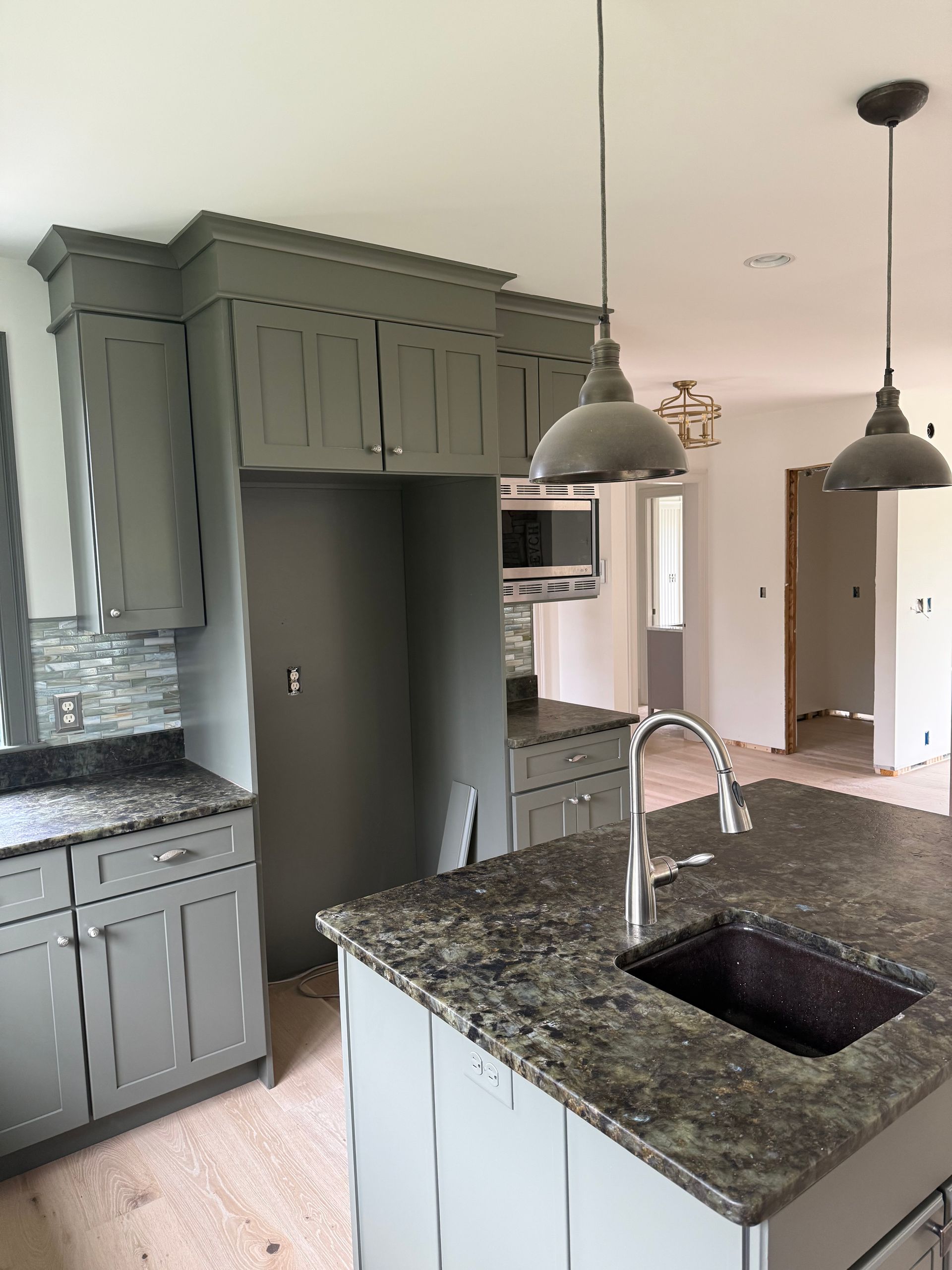
Sage and Muted Greens
Earth-inspired greens pair well with wood floors, natural stone, and traditional New England interiors.
Deep Greens and Blues
Darker cabinet colors can create contrast, particularly on kitchen islands or lower cabinets.
Two-Tone Cabinets
Using different colors for upper and lower cabinets can add visual interest without changing the cabinetry itself.
For Southern Maine homes, the best color isn't necessarily the most popular one.
It's the color that works with your kitchen's natural light, countertops, flooring, backsplash, and overall architectural style.
A color that looks beautiful in a magazine may appear very different in a north-facing kitchen with limited daylight.
Sampling colors in the actual room is always a smart step.
Is Fall and Winter a Good Time to Refinish Kitchen Cabinets in Maine?
Absolutely. Interior cabinet refinishing is not dependent on the same outdoor weather conditions that limit exterior house painting.
As temperatures drop throughout Southern Maine, many homeowners begin focusing on indoor improvement projects.
Cabinet refinishing can be an appealing option because it allows homeowners to update an important living space without undertaking a complete kitchen renovation.
However, indoor temperature, ventilation, humidity, and coating requirements still matter.
A professional contractor should account for those conditions when planning the project.
Fall and winter can also be good times to evaluate additional interior painting projects, particularly when updating the kitchen leads to decisions about surrounding walls, ceilings, or trim.
Why Hire a Professional Cabinet Refinishing Contractor in Southern Maine?
Kitchen cabinets are among the most frequently used painted surfaces in a home.
Unlike walls, cabinet doors and drawers are constantly opened, closed, touched, and cleaned.
That's why professional cabinet refinishing requires attention to details that go beyond ordinary wall painting.
An experienced contractor can evaluate the existing surfaces, recommend an appropriate preparation and coating system, and explain what results are realistic for your particular cabinets.
At Jim Steeves Painting, our services include professional cabinet refinishing and millwork finishing for Southern Maine homeowners.
Whether you're updating an older kitchen, changing the appearance of stained wood cabinets, or exploring alternatives to cabinet replacement, we can help evaluate the project and discuss your options.
Ready to Update Your Kitchen Cabinets?
If your kitchen cabinets are structurally sound but looking dated, you may not need to replace them to achieve a fresh appearance.
Professional cabinet painting or refinishing can be a practical way to update your kitchen while keeping the cabinetry you already have.
The best first step is determining whether your cabinets are suitable for refinishing and what type of finish will meet your expectations.
Jim Steeves Painting serves homeowners throughout Southern Maine, including communities in York County and Cumberland County.
Contact Jim Steeves Painting for a free, no-obligation cabinet refinishing estimate.
We'll help you evaluate your existing cabinets, discuss the available finishing options, and determine whether refinishing makes sense for your home.
Frequently Asked Questions About Kitchen Cabinet Refinishing
Is it better to paint or replace kitchen cabinets?
If your cabinets are structurally sound and you're happy with the layout, professional painting or refinishing may be the better option. Replacement is generally more appropriate when cabinets are damaged, poorly constructed, or the kitchen needs a major redesign.
How much does kitchen cabinet painting cost in Southern Maine?
Costs depend on the number of cabinets, doors and drawers, existing condition, preparation requirements, finish selection, and project complexity. A professional on-site estimate is the best way to determine the cost for your kitchen.
How long does professional cabinet painting take?
The timeline varies by kitchen size, preparation needs, application process, and coating requirements. Drying and curing times must also be considered before cabinets return to normal use.
Can you paint over stained wood kitchen cabinets?
Often, yes. Many stained wood cabinets can be painted after appropriate cleaning, preparation, and priming. The existing finish and wood condition should be evaluated first.
Ready to Refresh Your Home?
Transform your home with professional painting services throughout Southern Maine. Get started with a free,
no-obligation estimate.
Recent Articles
Our Painting Services
Ready to Give Your Home a Fresh Look?
Whether you're planning an interior refresh, exterior painting, or cabinet refinishing, Jim Steeves is here to help homeowners throughout Southern Maine. Let's bring your vision to life!